Read Our Reviews on:


WHAT DOES THE US-IRAN WAR IMPACT ON THE GLOBAL ECONOMY MEAN FOR BUSINESS LEADERS IN 2026?
The war between the United States and Iran is no longer just a geopolitical headline. It has become a real operating issue for finance teams, supply chain leaders, and growth-focused companies everywhere.
Higher oil prices, shipping disruptions around the Strait of Hormuz, and renewed inflation pressure are now affecting budgets, demand forecasts, and investment decisions. For many companies, the key question is no longer whether costs will rise. It is about how to protect margins without slowing the business down. That is exactly why outsourcing is becoming more strategic again.
Key Takeaways
- The global shock is real. The International Monetary Fund cut its 2026 global growth forecast to 3.1% under a limited-conflict assumption, versus a pre-conflict expectation of 3.4%, while warning that a longer or broader conflict could push growth down to 2.5% or even 2.0% and drive inflation much higher.
- Energy is the main transmission channel. The World Bank now expects energy prices to surge 24% in 2026, with Brent averaging about $86 per barrel and potentially reaching $115 in a worse scenario.
- Businesses are shifting into defense mode. Companies are hedging, delaying spending, raising prices, front-loading inventory, and diversifying away from concentrated Gulf-linked supply chains.
- The BPO industry in the Philippines war effects are mixed, not uniformly negative. Rising fuel and power costs can pressure delivery margins, and Western clients may delay projects. But the same cost pressure also makes outsourcing more attractive for companies trying to preserve profitability.
- Outsourcing Philippines 2026 still makes strategic sense. The country combines large cost arbitrage, strong English capability, a deep delivery ecosystem, and government-backed incentives that help companies stay agile during geopolitical tensions.
In a tougher market, businesses usually look for flexible capacity, lower operating costs, and reliable delivery models. In that environment, outsourcing to the Philippines remains one of the smartest ways to stay efficient without sacrificing quality.
How the War is Reshaping the Global Economy
The clearest big-picture signal comes from multilateral institutions. The IMF’s April 2026 World Economic Outlook says the global economy has moved into a slower, more inflation-prone phase because of war-driven commodity pressures, firmer inflation expectations, and tighter financial conditions.
Under its baseline, global growth slows to 3.1% in 2026, and inflation rises to 4.4%. In its adverse scenario, growth drops to 2.5%, and inflation rises to 5.4%. In its severe scenario, growth falls to 2.0% in both 2026 and 2027, while inflation moves above 6%. That is why talk of stagflation is back on the table.
Energy is at the center of the shock. The World Bank says the Middle East war has triggered the largest oil supply shock on record, with an initial loss of about 10 million barrels per day. It expects energy prices to rise 24% in 2026 and overall commodity prices to climb 16%.
Brent was still more than 50% higher in mid-April than at the start of the year, even after easing from its peak. Fertilizer prices are also projected to rise 31%, which matters because energy shocks do not stay in energy. They spill into food, transport, and manufacturing.
The Strait of Hormuz is the critical chokepoint. The World Bank says it handles about 35% of global seaborne crude oil trade, while the U.S. Energy Information Administration says nearly 20% of global oil supply flows through it and that the closure has also affected roughly 20% of global LNG supply.
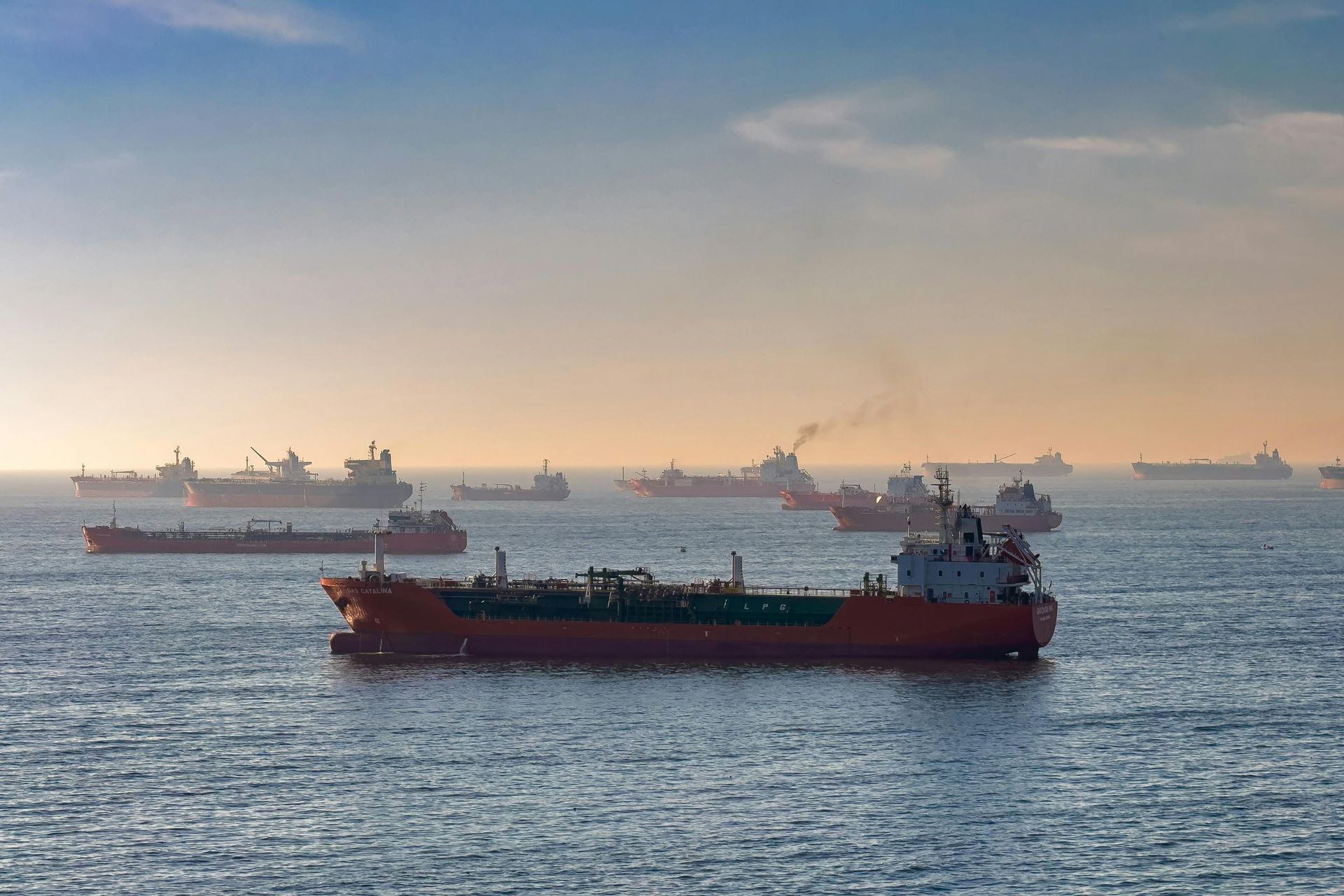
In practical terms, that means even a partial disruption raises shipping risk, insurance costs, delivery times, and price volatility far beyond the Gulf itself. Regional effects are uneven. Europe is being hit hard by rising input costs and weaker demand. Reuters reported that the euro zone’s flash composite PMI fell to 48.6 in April from 50.7 in March, with the services PMI slipping to 47.4 and the input price index jumping to 76.9.
Asia remains the fastest-growing broad region in the IMF’s forecasts, but it is highly exposed to imported energy, with Reuters noting that emerging Asian markets typically rely on Hormuz for more than half of crude imports and more than a third of gas imports.
In the United States, the shock is showing up less through physical shortages and more through inflation, gasoline prices above $4 a gallon, and higher bond yields. Financial markets are sending a mixed message. In March, global shares slumped, and bond yields jumped as investors started pricing in a longer conflict and a more hawkish central-bank path.
By mid-April, U.S. equities had recovered much of the initial loss as investors bet the conflict would be temporary, but Reuters still reported oil prices about 40% above pre-war levels and Treasury yields materially higher. That kind of market resilience can disappear quickly if supply disruptions last longer than expected.
How Businesses are Responding Today
The first response was cost defense. Reuters’ review of company disclosures found that 24 companies had withdrawn or cut forecasts, 35 had signaled price hikes, and another 35 had warned of a financial hit since the war began. That tells you a lot about the business mood: leaders are still operating, but they are preparing for a more expensive year.
The second response is hedging and contract protection. Some firms entered the shock with lower-cost purchase agreements or fuel hedges already in place. That has bought time, especially for consumer companies and airlines.
But it is not a permanent shield. Reuters reported that jet fuel prices had nearly doubled since the end of February, leaving airlines especially exposed because tickets were often sold before the fuel cost spike.
The third response is supply chain redesign. Manufacturers in autos, electronics, and industrial services are already reporting shortages or price spikes in oil-linked materials such as plastics, solvents, naphtha-derived inputs, aluminum, and printed circuit board components.
At the same time, supply chain planners are moving away from concentrated Gulf exposure. The Thomson Reuters Institute noted that companies that spent money diversifying away from Gulf suppliers are unlikely to reverse those decisions even after a ceasefire, because the chokepoint risk is now hard to ignore.
The fourth response is a more disciplined sourcing strategy. Deloitte says outsourcing decisions are increasingly being driven not just by cost reduction, but also by access to scarce skills, greater agility, and outcome-based delivery models. In other words, companies are not simply looking for cheaper labor.
They are looking for scalable operating partners that can help them stay flexible when volatility is high. That is an important distinction for finance, accounting, and back-office leaders evaluating offshore models in 2026.

What does this mean for the BPO industry in the Philippines
For the Philippine outsourcing sector, the near-term pressure starts with energy and inflation. The Bangko Sentral ng Pilipinas (Central Bank of the Philippines) warned in early April that inflation risks had tilted sharply to the upside as the Middle East conflict drove costs higher.
The Philippine Statistics Authority then reported March headline inflation at 4.1%, up from 2.4% in February, with transport costs in the National Capital Region rising sharply. Reuters also reported that diesel and gasoline prices in the Philippines had more than doubled since the conflict began on February 28.
Those pressures matter for BPO operators. Higher fuel costs can feed into transportation allowances, backup power costs, facility expenses, and employee household budgets. Power is a particular concern because Reuters reported that the Philippines suspended spot power-market sales during the energy emergency and noted that the country already has some of the highest electricity tariffs in the region. That does not break the outsourcing model, but it can narrow margins for providers that are not operationally disciplined.
There is also a client-demand angle. If Western companies face weaker growth, higher energy bills, and tighter financing conditions, some will slow hiring, delay nonessential projects, or scrutinize new vendors more closely. That can lengthen sales cycles for outsourced teams. The caution appearing in corporate guidance, purchasing manager surveys, and investment plans suggests that some buyers will become more selective in the next few quarters.

But this is only half the story. The Philippine IT-BPM sector is entering this period from a position of strength. The IT and Business Process Association of the Philippines said the industry closed 2025 at roughly $40 billion in export revenue.
Moreover, around 1.9 million jobs are expected, and it has described 2026 as another year for cautious growth, with targets around $42 billion in revenue and 1.97 million jobs. That matters because mature industries usually absorb shocks better than fragile ones.
A second buffer is the country’s remittance base, though this is also a risk to watch. BSP data show that cash remittances from the Middle East totaled about $6.48 billion in 2025, or roughly 18% of all Philippine cash remittances. The IMF has separately warned that remittances tend to weaken in countries that send migrant workers to conflict-affected Gulf economies. So far, this is more of a monitoring issue than a confirmed collapse, but it is one more reason the Philippine economy has to stay alert.
Why Outsourcing to the Philippines Remains a Smart Strategy
This is where the long-term case becomes clearer. In an uncertain market, businesses prioritize efficiency, flexibility, and controllable costs. The Philippines still delivers all three.
First, labor arbitrage remains substantial. IBPAP’s industry roadmap describes the Philippines as offering more than 70% cost savings versus the U.S. and Europe in some delivery models.
That is why cost-effective outsourcing during geopolitical tensions becomes more compelling, not less. When margins are under pressure, shifting selected finance, accounting, support, or back-office work offshore can protect profitability without forcing a company to freeze growth.
Second, the talent base is deep and proven. IBPAP’s roadmap says the Philippines is the world’s second-largest IT-BPM delivery location, with a 16% to 18% share of the global market, around 850,000 graduates a year, strong English capability, and a buyer mix still led by North America at roughly 70%. That is not a niche outsourcing story. It is a mature global delivery ecosystem.

Third, government support is tangible. The Fiscal Incentives Review Board says registered enterprises can access a four- to seven-year income tax holiday, 10 years of special corporate income tax for export enterprises, enhanced deductions, customs-duty exemptions, and VAT incentives.
Under CREATE MORE, the incentive regime became more generous and more flexible, with some incentive periods extended to as much as 17 or 27 years, broader VAT relief, and formal recognition of flexible work arrangements.
Fourth, the delivery model has become more resilient. In April 2026, FIRB authorized up to 90% temporary work-from-home arrangements for registered business enterprises affected by the national energy emergency, effective from March 24, 2026. That policy is important. It shows that the Philippine outsourcing ecosystem can adapt quickly when energy and transport risks rise. For buyers, that means remote and hybrid delivery is no longer a workaround. It is part of the resilience strategy.
Fifth, the investment ecosystem is still supportive. Companies can still structure operations through agencies such as the Philippine Economic Zone Authority and the Board of Investments, using the country’s established legal, tax, and operating frameworks to build scalable offshore teams. In other words, the short-term global shock does not erase the structural case for the Philippines. If anything, it strengthens it.
FAQs
List of Services
-
1. How is the US-Iran war affecting global businesses in 2026?List Item 1
The conflict is driving higher oil prices, supply chain disruptions, and inflation, which increase operating costs and force businesses to reassess budgets, pricing, and operational efficiency.
-
2. Why is outsourcing becoming more strategic during geopolitical instability?List Item 3
Outsourcing helps companies stay flexible, reduce fixed costs, and maintain productivity without expanding internal teams, making it a practical response to economic uncertainty.
-
3. Is outsourcing to the Philippines still cost-effective in 2026?List Item 4
Yes. The Philippines continues to offer significant cost savings, a skilled English-speaking workforce, and a mature outsourcing ecosystem, making it a strong option despite global inflation pressures.
-
4. What challenges does the Philippine outsourcing industry face due to the war?
Rising energy and transportation costs, along with cautious client spending, can impact margins and demand. However, these are offset by increased interest in outsourcing as a cost-control strategy.
-
5. How can outsourcing help businesses protect margins during inflation?
By shifting non-core, process-driven tasks offshore, companies can lower labor and operational costs while maintaining service quality, helping offset rising expenses in other areas.
What this means for your Business
If you are a CFO, controller, finance director, or operations leader, the practical message is straightforward.
Do not treat this war only as a demand risk. Treat it as a cost-structure test. The companies that come through this period best will be the ones that can lower unit costs, preserve service quality, and keep enough flexibility to scale up or down quickly.
A strong approach in 2026 usually looks like this:
- Keep strategy and control near the core business, but offshore execution-heavy and process-driven work. Think bookkeeping, reconciliations, AP/AR support, payroll administration, reporting support, customer service, and similar back-office functions.
- Choose providers with remote-ready continuity plans, not just office-based capacity. The recent Philippine policy response has shown how valuable work-from-home flexibility can be during energy stress.
- Build contracts around outcomes, not only seats. Deloitte’s research shows sourcing is moving toward measurable business results, faster scaling, and better access to specialist talent.
- Use outsourcing as a margin-defense lever. In a year defined by energy volatility and inflation pressure, offshore support can be one of the few ways to reduce costs without reducing capability.
Conclusion
The US-Iran war's impact on the global economy is serious. Oil has become more volatile. Inflation risks have risen. Growth forecasts have been cut. Supply chains are being rerouted. And businesses are adjusting by protecting cash, delaying some investments, and rethinking where work should be done.
Still, difficult conditions do not eliminate opportunity. They usually sharpen it. In times like this, businesses do not stop looking for growth. They look for smarter growth. That is why outsourcing to the Philippines remains such a strong option in 2026.
The country’s combination of lower costs, skilled English-speaking talent, government-backed incentives, and resilient remote delivery makes it a practical answer to today’s geopolitical volatility. For companies that want a more efficient finance or support operation without compromising reliability, this may be the right moment to rethink the model.
If your organization is exploring that shift, Remotely Philippines can help turn cost pressure into a smarter, more resilient operating strategy.
Sign up for our newsletter
Get regular curated content on management, outsourcing, and everything you need to know to stay ahead of the curve.
Newsletter
More Articles