Five years give an organization enough time to see which ideas hold up and which ones need to change.
For
finance teams, that distinction matters. Growth can expose weaknesses that were easy to overlook when a team was smaller. Informal communication eventually needs more structure. Responsibilities become more specialized. Processes that once depended on individual knowledge need clearer ownership. And as teams become more distributed, maintaining consistency requires more than good intentions.
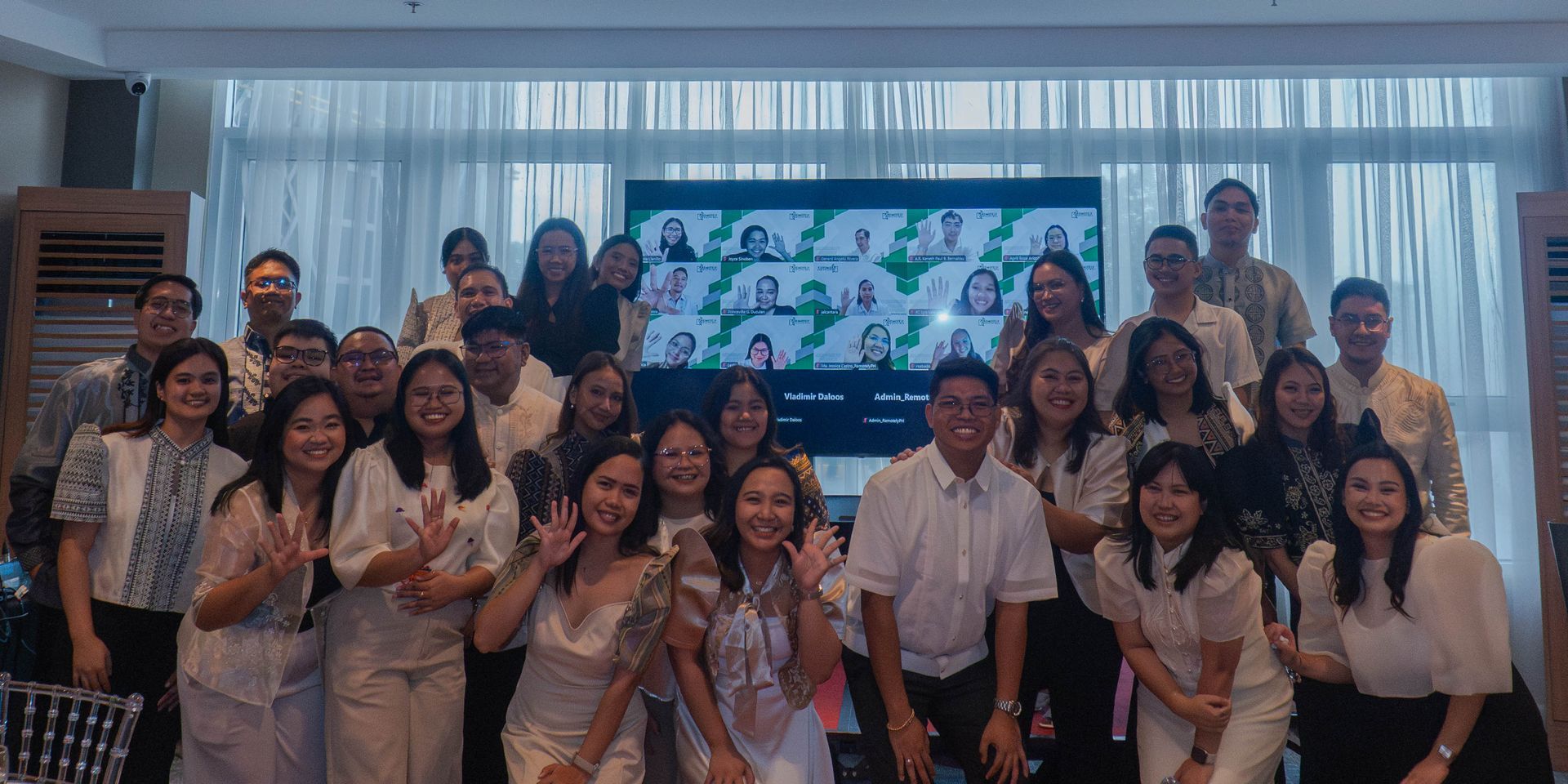
As Remotely Philippines reaches its fifth year, we have been reflecting on what it has taken to build and grow a remote organization around accounting and finance. We were built around a remote operating model, connecting Filipino accounting and finance professionals with international teams.
One of our earliest challenges was building client trust while creating the processes and standards needed to deliver consistent work across locations. That experience reinforced something we believe finance leaders can take beyond the remote environment:
“A scalable finance team is not created by adding people alone. It is built through the operating model around those people.”
That means being intentional about communication, culture, processes, talent development, and accountability. These are not separate considerations. They influence how reliably a finance team closes the books, manages controls, transfers knowledge, responds to change, and supports the wider business.
Key Takeaways
- Remote finance teams need intentional communication practices that make decisions, handoffs, and ownership clear.
- Culture influences how teams communicate issues, collaborate, and uphold finance standards, making it an operating consideration rather than simply an engagement initiative.
- Processes should evolve as teams grow, particularly where work depends heavily on individual knowledge.
- Talent development helps finance teams build the capabilities they will need as roles become more analytical, strategic, and technology-enabled.
- Clear ownership, outcomes, quality standards, and visibility allow teams to operate with greater autonomy.
- A scalable finance function depends on the operating model surrounding its people, not simply the number of people on the team.
Five Lessons from Our Five-Year Journey
Over the past five years, we have seen firsthand how a
remote finance organization
changes as its people, clients, and responsibilities grow. Some lessons came from challenges we had to solve along the way, while others became clearer as the organization evolved.
These experiences reinforced five principles that we believe are relevant to finance leaders building teams for sustainable growth:
- Intentional communication creates clarity across distributed teams.
- Designed culture strengthens connection, trust, and shared standards.
- Maturing processes help teams maintain consistency as complexity increases.
- Talent development builds the capabilities needed for the next stage of growth.
- Visible accountability creates the foundation for greater autonomy and flexibility.
These are not lessons specific to remote work. They are operating principles that can help finance teams build greater resilience, continuity, and capacity as their organizations evolve.
1. Intentional Communication Is Operating Infrastructure
Communication can feel effortless when everyone works in the same place. A question can be answered across a desk, a manager can clarify an issue in passing, and context can be picked up through conversations that were never formally scheduled.
Distributed teams have fewer opportunities for those informal exchanges. That makes the way information moves much more important.
Research from Microsoft found that firm-wide remote work made organizational networks more siloed and reduced collaboration across groups.
2. Culture Must Be Designed
Remote work does not remove the need for culture. It makes the mechanisms that build culture more visible. In a traditional workplace, employees often develop relationships through everyday interactions. They learn how colleagues communicate, how leaders respond to problems, and what behaviors are valued through repeated exposure. Distributed teams must create more of those opportunities intentionally.
Microsoft research has found that
remote work can reduce connections
between employees outside their immediate groups, making it harder for information and social connections to move across an organization. The researchers recommended proactive efforts to create connections across teams and provide opportunities for interaction beyond formal meetings.
This matters in finance because culture affects more than engagement. It affects how people handle mistakes, whether they raise concerns early, how comfortably they ask for clarification, and whether they understand the standards expected of them. A finance professional who feels responsible for the quality of the broader process is likely to approach a task differently from someone who sees their responsibility as simply completing an assigned item.
As Remotely grew, we learned that a remote culture could not simply be assumed. Connection, recognition, learning, leadership, and shared standards all needed deliberate attention.
The objective was not to recreate an office online. It was to
create an environment
where people could understand how they contribute, build relationships with colleagues, and remain connected to the organization even when they are not physically together. For finance leaders, that can start with a few practical questions:
- Are team standards clear?
- Do people know what to do when a deadline is at risk?
- Can employees raise concerns before an issue becomes serious?
- Do managers recognize and reinforce the behaviors they want repeated?
Culture becomes operational when it influences how people work. For a finance function, that means building a culture that supports accuracy, accountability, collaboration, and early escalation rather than treating culture as something separate from performance.
3. Processes Must Mature with Growth
Early-stage teams often succeed through flexibility. People know each other's responsibilities, experienced employees carry a great deal of institutional knowledge, and problems can often be resolved quickly through direct communication. That flexibility is valuable. But as a business grows, the same approach can become difficult to sustain.
A process that works when three people understand every detail may become fragile when ten people are involved. A task that depends on one experienced employee creates a continuity risk. A review process that is understood informally can become inconsistent when responsibilities are distributed across multiple people or locations.
Finance leaders encounter this as their organizations grow. More entities, transactions, reporting requirements, stakeholders, and controls create greater demands on the underlying finance operating model.
PwC's finance transformation
work emphasizes standardization, simplification, integrated processes, and clear organizational structures as foundations for a more effective finance function.
Our own journey reflected that progression. As Remotely grew, broad responsibilities evolved into clearer ownership. Informal knowledge sharing is increasingly needed to be supported by structured development. Ad hoc execution needed more documented workflows, and handoffs needed greater consistency.
The lesson was not that every process needs to become complicated.
Good process design should make important work easier to repeat.
For finance leaders, this is particularly relevant when evaluating processes that depend heavily on individual knowledge.
Consider:
- Reconciliations that rely on one person
- Recurring journal entries without clear documentation
- Reporting processes with unclear ownership
- Manual handoffs between finance teams
- Review activities that vary depending on who performs them
- Critical procedures that are understood but not documented
Not every task needs a detailed manual. The focus should be on the areas where consistency, control, continuity, and knowledge transfer matter most. As organizations grow, the question changes from
“Can this person do the work?” to
“Can this work continue reliably as the team changes?” That is an operating-model question.
4. Talent Development Is as Important as Talent Acquisition
Adding people can address capacity. But It does not automatically build capability. A finance team may have enough employees on paper and still face challenges if people are not developing the technical knowledge, judgment, communication skills, and leadership capabilities needed for the organization's next stage.
This became increasingly clear as Remotely evolved. Early learning often happened through hands-on work, coaching, and exposure to different responsibilities. As the organization grew, development needed to become more deliberate, with greater emphasis on structured learning, leadership development, and building capabilities over time.
5. Accountability Creates Flexibility
Remote work is sometimes discussed as a question of trust. But sustainable flexibility depends on more than trusting people to work independently. It depends on making accountability clear. People need to understand what they own, what needs to be delivered, when it is due, and what quality looks like. Leaders need enough visibility to understand whether important work is progressing without having to monitor every activity.
That distinction became important as Remotely grew. Over time, clearer standards and responsibilities allowed more decisions to move closer to the work. What initially required more direct leadership involvement could increasingly be handled through clearer ownership and distributed leadership. This is where accountability and flexibility meet.
Clear accountability gives people more room to operate independently.
For finance teams, the principle is especially important. Flexibility cannot come at the expense of reporting deadlines, control requirements, quality standards, or client confidence. The answer is not necessarily more oversight. It is better visibility.
For each critical responsibility, finance leaders should be able to answer four basic questions:
- Who owns it?
- What needs to be delivered?
- What standard does it need to meet?
- How will progress or completion be visible?
When those expectations are clear, managers can spend less time checking activity and more time addressing exceptions, improving processes, developing people, and supporting the business. That is the kind of flexibility that can scale.
What Five Years Taught Us About Building for the Next Five
Looking back at five years of building a remote organization, the most significant changes were not simply about where people worked. They were about how the organization operated. Roles became clearer as the team grew. Knowledge sharing has become more structured.
Leadership became more distributed. Workflows became more documented. And remote work evolved from a way of working into an operating model supported by culture, processes, and shared standards. None of those changes happened because there was a single moment when the organization decided it had to “scale.”
They developed in response to real operating needs. That is an important lesson for finance leaders. Operating models rarely need to be redesigned all at once. More often, leaders identify where the current model is creating friction and strengthen those areas before they become larger constraints.
A growing finance team may start with a communication problem. Over time, that may reveal an ownership problem. The ownership problem may expose a documentation gap. The documentation gap may highlight a development need. Eventually, the organization may realize that the issue was not an isolated process at all.
The operating model had simply outgrown the way the work was originally organized. Recognizing that transition early gives finance leaders more options. The goal is not to build unnecessary complexity in anticipation of every possible scenario. It is to build enough structure to support the organization's current needs while creating room for what comes next.
That balance matters whether a finance team is fully remote, hybrid, or office-based.
Five Years, Five Lessons
Our fifth anniversary is a
milestone for Remotely Philippines, but the most meaningful part of the milestone is the opportunity to reflect on what the journey has taught us. The five lessons are straightforward:
- Communication
needs to be intentional
- Culture
needs to be designed
- Processes
need to mature with growth
- People
need opportunities to develop
- Accountability
needs to create visibility, not unnecessary oversight.
Together, these principles shape how a finance organization performs as complexity increases. They influence whether knowledge stays with individuals or becomes part of the organization. They affect how quickly issues are surfaced, how reliably work moves between people, and how confident leaders can give teams greater autonomy.
For us, five years is not simply a look back. It is also a starting point for the next stage. As finance teams continue to navigate changing technology, growing expectations, talent challenges, and increasing demands for efficiency, the organizations that adapt well will be those willing to keep refining how their people, processes, and systems work together.
That is the journey we look forward to continuing at Remotely Philippines: building on what we have learned, developing our people, strengthening how we work, and continuing to support finance teams as their needs evolve.
For finance leaders, the same reflection can be valuable:
Is the way your finance team operates designed for the organization you have today, or the organization you are building next?
If that question reveals areas that need more capacity, clearer processes, stronger controls, or
additional finance support, it may be worth exploring what a more scalable operating model could look like.
Here’s to the next five years of building finance teams that are more connected, capable, and ready for what comes next.